
Managing Diabetes During Ramadan: What Healthcare Providers Need to Know
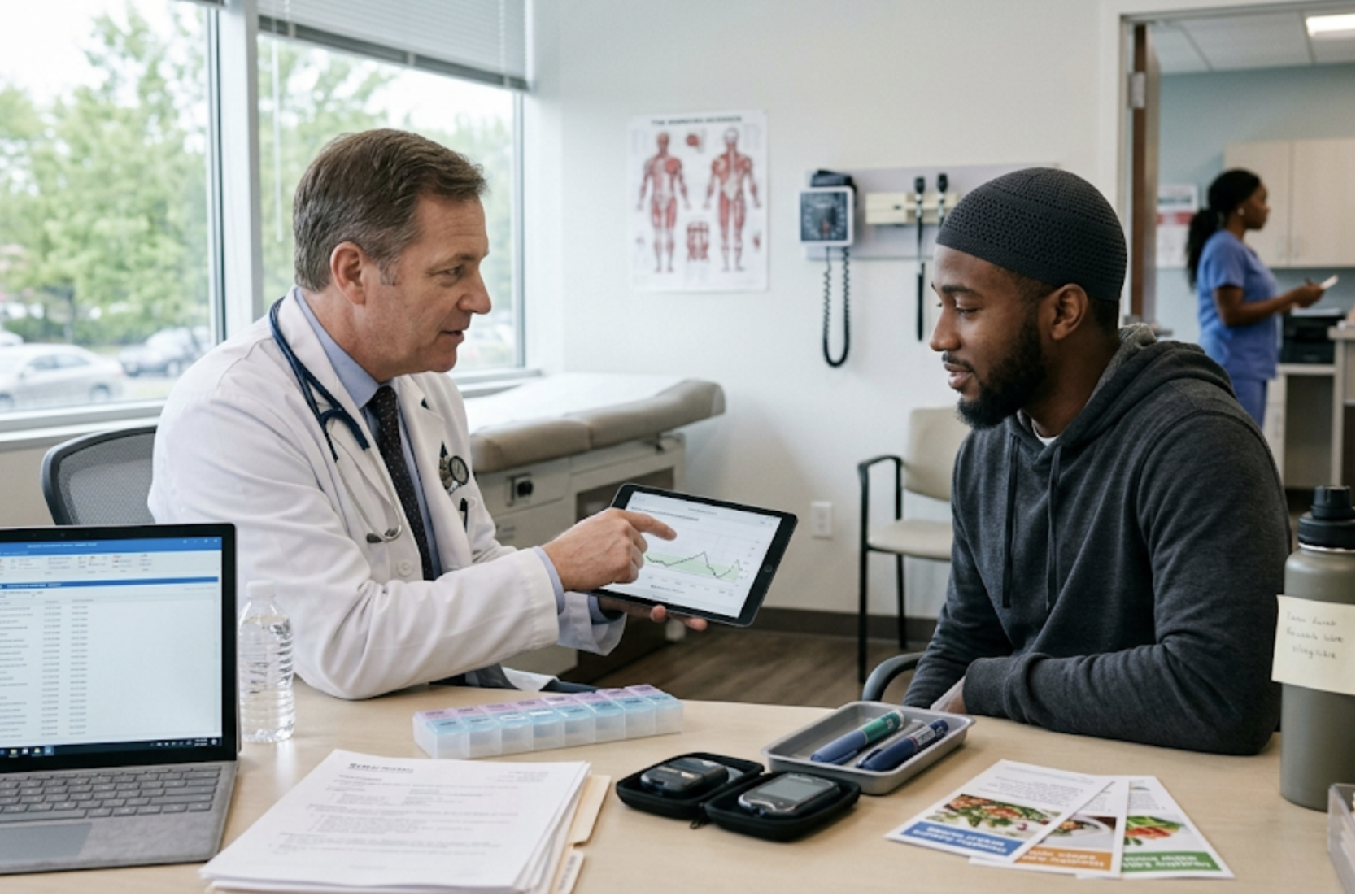
Approximately 150 million people with diabetes worldwide observe Ramadan each year. According to published survey data, 43 percent of patients with type 1 diabetes and nearly 79 percent of patients with type 2 diabetes fast for at least 15 days of the holy month, despite exemptions available under Islamic law to those with health conditions.
This is not a small clinical niche. For healthcare providers in many regions, Ramadan represents a significant and recurring clinical management challenge for a large proportion of their diabetes patient panel.
The updated DaR-ADA-IDF Ramadan guidelines, with the most recent revision released in 2025, provide a framework for managing diabetes during fasting. But applying those guidelines to individual patients, with their different diabetes types, regimens, risk factors, and glucose patterns, requires clinical judgment that goes beyond guideline awareness.
1. The Physiological Challenge of Ramadan Fasting with Diabetes
Ramadan fasting involves abstaining from food and drink from dawn to sunset for 30 days. Depending on the season and geographic location, the daily fasting period can range from around 12 to 20 hours.
For a patient on insulin, this creates a specific physiological challenge. The normal pattern of eating and insulin dosing is completely disrupted. The two main meals, Suhoor before dawn and Iftar at sunset, replace the usual meal pattern. Caloric intake during Iftar can be substantial, particularly in social and family settings where large meals are traditional.
For patients on basal bolus insulin therapy, this disruption requires deliberate, individualised dose adjustment. The pre-dawn meal may require a smaller bolus dose than a standard morning meal. The evening meal may require a larger one. The overnight fasting period is longer than a typical post-dinner fast. Each of these changes has implications for glucose management, and the implications are not the same for every patient.
2. Risk Stratification Is the First Clinical Step
Not all patients with diabetes carry the same risk from Ramadan fasting, and clinical management should be calibrated to risk rather than applied uniformly.
The IDF-DAR risk stratification framework categorises patients into low, moderate, and high-risk groups based on factors including diabetes type, the nature of the insulin regimen, history of severe hypoglycemia, current glycemic control, the presence of complications, and cognitive and self-management capability.
High-risk patients, including those with type 1 diabetes, those with a recent history of severe hypoglycemia, patients with significant comorbidities, and those with poor awareness of hypoglycemic symptoms, require more active clinical management and more frequent monitoring than lower-risk patients.
The pre-Ramadan clinical encounter, ideally occurring several weeks before the month begins, is the opportunity to stratify risk, educate the patient about management adjustments, and establish a monitoring and dose adjustment plan for the fasting period. Research has shown that structured pre-Ramadan diabetes assessment significantly reduces hypoglycemia rates and hospital presentations during the month.
3. Hypoglycemia Is the Primary Clinical Risk
The most significant acute clinical risk for insulin-treated patients fasting during Ramadan is hypoglycemia.
Prolonged fasting periods, particularly in the late afternoon before Iftar, create conditions where insulin doses calibrated for a non-fasting state can produce hypoglycemia. A 2025 observational study of patients with type 1 diabetes fasting during Ramadan found clear evidence of underestimated insulin adjustments, meaning that the dose reductions made before the month did not fully account for the extent of glucose-lowering that the fasting state required.
The clinical implication is clear. Standard dose adjustments applied uniformly to all fasting patients are inadequate. Individual assessment of each patient's glucose patterns, eating schedule during Ramadan, and insulin sensitivity is required to make appropriate adjustments.
4. Hyperglycemia After Iftar Is the Counterbalancing Risk
While hypoglycemia dominates the pre-Iftar period, the Iftar meal itself presents the opposite risk.
Large evening meals with high carbohydrate content are traditional in many communities during Ramadan. For an insulin-treated patient whose bolus dose was calibrated for lighter meals, the Iftar meal may produce significant postprandial hyperglycemia.
This bidirectional risk, hypoglycemia during the fasting hours and hyperglycemia after breaking the fast, is one of the defining clinical features of Ramadan management. It requires a dosing approach that accounts for the timing and likely content of both the pre-dawn and sunset meals, and that builds in flexibility for the day-to-day variation that is inherent in this period.
5. Monitoring Is Essential and Under-Used
Research has consistently shown that patients who monitor their glucose more frequently during Ramadan have better outcomes. Both hypoglycemic and hyperglycemic episodes are reduced when patients have the information to make timely adjustments.
The updated 2025 guidelines emphasise the value of continuous glucose monitoring for higher-risk patients during Ramadan, providing real-time data that allows both patients and clinicians to respond to glucose trends before they become dangerous.
For clinicians supporting patients during Ramadan, establishing a clear monitoring plan and defining the glucose values that should trigger contact or self-adjustment is a critical component of the pre-Ramadan assessment.
PreciseDM provides structured insulin dosing guidance that helps clinicians approach the individualised dose adjustments that Ramadan management requires, available on web and mobile.
Download the PreciseDM app today and experience all four clinical tools in practice.
Try PreciseDM in your clinical workflow
Four evidence-based insulin dosing tools — DiaForm (Starting), Maintenance, Steroid, and Gestation — designed for trained healthcare professionals.