
Why Clinicians Still Hesitate to Adopt Digital Diabetes Tools, and What Changes That
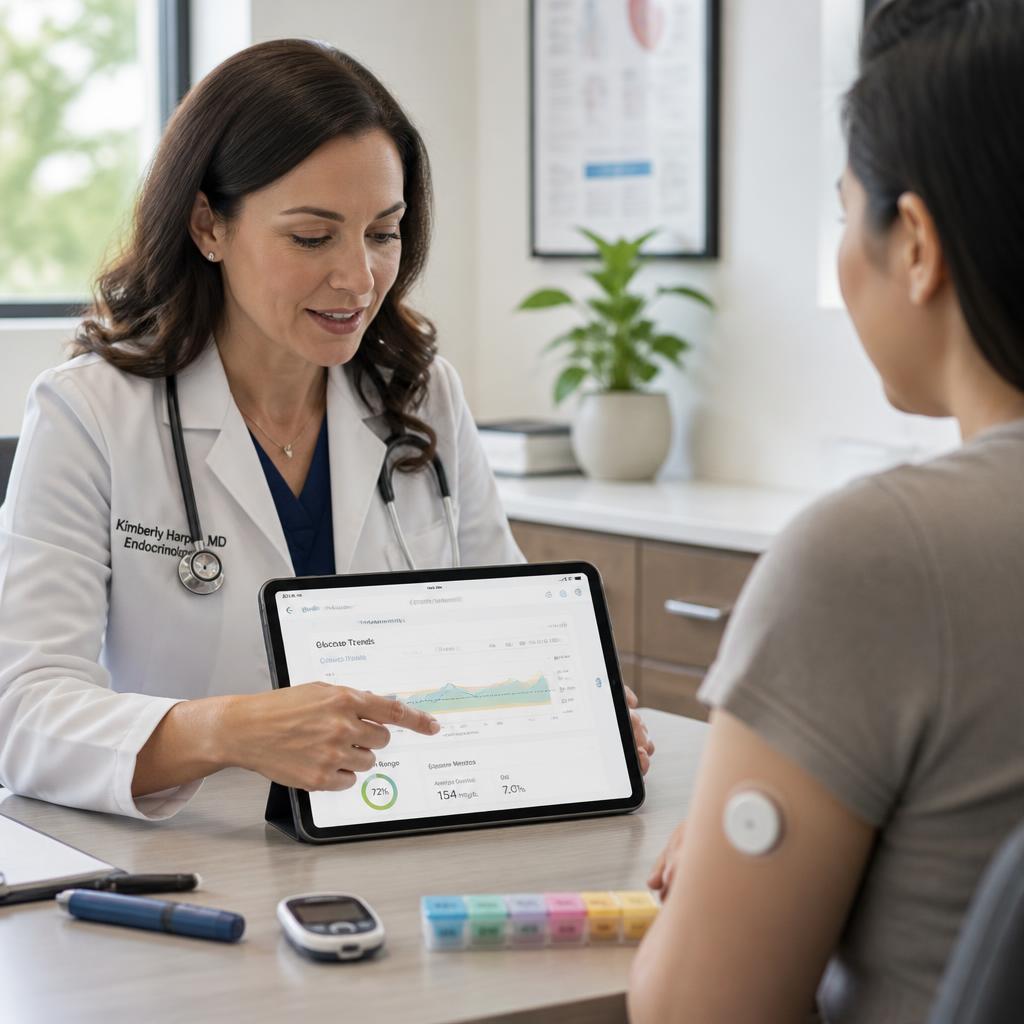
Digital health tools for diabetes care have been available for years. The evidence base for clinical decision support in diabetes management is growing. And yet, in a 2025 Medscape report, primary care physicians identified a consistent pattern: despite CGMs becoming standard of care for insulin-treated patients, uptake in primary care remains limited. The tools exist. The adoption often does not follow.
Understanding why is not just an academic question. It has direct implications for how clinical tools need to be designed, how they need to be positioned, and what it takes for them to earn a place in the daily workflow of a busy clinician.
1. Previous Tools Have Not Delivered
The most important context for understanding clinician hesitancy about digital tools is the history of digital tools that have not worked as promised.
Electronic health records were introduced with the explicit goal of reducing administrative burden and improving information access. For many clinicians, they have achieved the second goal partially and failed at the first comprehensively. EHR documentation is now one of the most consistently cited sources of time pressure and burnout in clinical medicine.
When a tool promises to improve clinical efficiency and instead adds to the workflow, the damage is not just to that tool. It is to the category. Clinicians who have experienced multiple technology disappointments approach new tools with a scepticism that is earned and reasonable.
The tools that have overcome this scepticism share a clear profile. They solve a specific, clearly defined clinical problem. They integrate into existing workflows without requiring significant additional steps. Their outputs are transparent and interpretable. And they are fast enough to use in actual clinical conditions, not just in controlled demonstrations.
2. Complexity Is a Real Barrier
Many digital diabetes tools have been designed by people who understand the clinical domain deeply. This can produce tools that are clinically comprehensive but practically unusable in the time available in a typical clinical encounter.
A tool that requires 15 minutes to complete is not a tool a busy clinician will use. A tool that produces a lengthy report requiring specialist knowledge to interpret does not serve a generalist who needs to make a decision in the next few minutes. Clinical utility is a function of both clinical validity and practical usability. Without both, adoption does not follow.
This is why design is not secondary to clinical content in decision support tools. The way a tool is structured, the number of inputs it requires, the clarity of its outputs, and the speed with which it can be used are as important to adoption as the quality of the underlying clinical logic.
3. Trust Has to Be Earned Through Transparency
Clinicians are trained to evaluate evidence before acting on it. A tool that produces a dosing recommendation without explaining its reasoning is asking clinicians to accept guidance on trust, and that is not how clinical culture works.
The tools that earn and maintain clinical trust are those whose outputs are transparent. The clinician can see what inputs were used, understand the logic that was applied, and evaluate whether the recommendation is appropriate for this specific patient. They can agree, modify, or override the recommendation, because they can see why it was made.
This transparency is what distinguishes a genuine decision support tool from a black-box algorithm. It preserves clinical authority while providing structured support, which is the only combination that clinical professionals will consistently use.
4. Mobile Access Is Not Optional
A clinician who has to return to their desktop to use a decision support tool is a clinician who will usually not use it at the point of decision. Clinical decisions are made in examination rooms, on ward rounds, in urgent situations. The tool needs to be where the decision is.
Mobile access to decision support tools is increasingly becoming a baseline expectation rather than a differentiator. Clinicians who are comfortable using mobile devices in their daily work expect the same accessibility from clinical tools. A platform that is only web-accessible limits its own relevance to a subset of clinical moments.
5. The Adoption Pattern That Works
Based on the evidence from clinical technology adoption research and the experience of tools that have earned sustained clinical use, the adoption pattern that works follows a consistent logic.
The tool solves a problem the clinician already recognises and feels. It is specific enough to be meaningful. It fits into the existing workflow without requiring a significant behaviour change. It produces fast, clear, interpretable output. And it proves itself on real clinical cases, not just in a demonstration environment.
Structured clinical decision support tools that meet these criteria are seeing growing adoption in diabetes care, not because clinicians have been persuaded to try technology, but because the tools are genuinely useful.
How PreciseDM Is Designed for Real Clinical Use
PreciseDM is built with clinical usability at its core. Its tools are specific to the insulin dosing decision, fast to use, accessible on mobile, and designed to produce transparent, interpretable guidance that clinicians can evaluate and act upon. The platform does not ask clinicians to accept outputs on faith. It shows its logic.
Start your free trial and explore structured decision support today. Download the PreciseDM app today and experience all four clinical tools in practice.
Try PreciseDM in your clinical workflow
Four evidence-based insulin dosing tools — DiaForm (Starting), Maintenance, Steroid, and Gestation — designed for trained healthcare professionals.